Tuesday, 24 March 2015

Time/Piece

My first work for the Schism Exhibition is a selection of curated objects that link together with a common theme of describing time. They all came about through random encounters or momentary ideas that are largely unrelated to things I have formally been researching this term. The idea for a work began with 'Dust from a Doctor's Waiting Room' (see previous post), and the other two came soon after as I had been thinking about objects that I find interesting and meaningful. I have often thought that my contact lenses have a lot of potential for an artwork as there is so much importance to what they do and how they affect my relationship with the world around me. I suppose the piece touches on themes of space and environment as well as time and its passing - the dust describing a place, and the contact lenses allowing a clarity to experience and understand the surroundings.
 
Although this way of working, and this medium of curating objects is very new to me, it felt comfortable and instinctive. I was confident in the idea from the start, which stood in contrast to my floundering with the latex and hourglass ideas. As I only had two weeks to make an exhibition work, when I thought of these ideas I knew it was important to follow them instead of making a piece that would follow on from my research but that I would not be entirely satisfied with. This has reminded me again how I do much better and work more effectively with an exhibition or particular event in mind; but this is cohesive with my views about art and life being strongly linked. I don't (generally) create work that can be hung on any wall or is suitable for every space, and instead make works that lend themselves to the space or the history or the mood in which it is to be experienced. I think work is largely much more effective when it is purposeful and considered, with a relationship to its surroundings.
 
 
Time/Piece
 
(Curated Objects)
 
2015
 
Indeed, I debated a lot over how the pieces might be presented and made sure I had a space in the Poly in mind before making the decision. I thought one of the windowsills would work best as they are clean horizontal surfaces with a lot of light to make out the detail. I researched display methods, thinking back to my tutorial where we discussed methods of framing work with museum/historical connotations, and I wanted to set the work up as being found objects or relics. (I suppose found objects in contemporary art are the relics of modern day society, the only difference is time...does this make using museum display methods too obvious then?). I considered a display case but thought this would interfere with viewing the work clearly - it was important that people would lean in and look closer to see the lettering and the condition of the lenses and the white hair in the petri dish.
 
I also considered displaying the contact lenses in a jewellery box (a black velvet one, which earrings or cufflinks are usually presented in), thinking that it would convey how important and valuable the lenses are to me, far more valuable than jewellery. However, as I thought about this more it began to be problematic - the lenses left in the air would be unusable and destroyed, so it would be a conflicting message. Furthermore, I thought this approach might be a little too prescriptive and insensitive - or alternatively that it would encourage too many irrelevant connotations of rings and proposals.
  
 
In situations where I am faced with a lot of decisions I find the best way to decide is to simply imagine the best outcome - in my mind this was the low black platforms of uniform size which I decided would look clean, refined and minimal. The size of the platforms was dictated by the objects, and by what I thought would be proportionate to the space.
 
It was the curators' decision not to put titles and names alongside the work, but I felt very strongly that the title and accompanying words describing the materials were very much a part of the work. So many people come past as I was setting up asking what the objects were - isn't it curious that, had they encountered the objects in everyday scenarios they would have known or understood what they were, but in an art setting they were suspicious, either mistrusting of their own judgement or anticipating something out of the ordinary. I knew it was very important to have the titles of the work next to it or the meaning would be entirely lost.
 
I decided to print these on acetate and positioned it on the wall of the window alcove. During the show I observed how many people simply did not see the accompanying text in that position, so moved it to a more central place just behind the square platforms. This has taught me how it is difficult to anticipate how people are going to experience the work, and some adjustment is often necessary.


The History of Ideas
 
(library slip from ‘Ideas - A General Introduction To Pure Phenomenology’ by Edmund Husserl)
 
 
Six Months of Sight
 
(gas-permeable contact lenses belonging to the artist)
 
 
Dust from a Doctor’s Waiting Room
 
(petri dish, dust removed from a Henry Hoover belonging to Westover Surgery)

 
I received some really positive and thought-provoking feedback at the private view and in the group and PASS crits. I always really enjoy hearing people's opinions on my work, and it often brings up interpretations that I have never thought of and am happy to accept. I was really surprised at how perceptive some of the first years were - some of them really understood it and said things that made me like the work as if it were made by another artist, as if it were an unfamiliar work that I was encountering for myself. I wish I taken notes throughout the crits to log the opinions, I must remember to do that in future as I have forgotten many of the specific comments. 
 
I had a lot of people say that they liked how subtle it was, in its meaning and appearance, and also that it is quite different from previous work that I have done. Another thing that was said was that it is a very 'complete' work - I wasn't entirely sure whether this was a good thing or whether it implies that the work gives too much away. I tried to see how visitors to the exhibition viewed the work - how long they would spend with it and whether they looked like they it was making them think. A lot of people did spend a fair amount of time with it, looking at the text and then the work, leaning in closer to look at the details etc. which indicates that it interrupted their routine and their lives for a short while, and maybe even changed their perspectives a little (I wish!). 


Sunday, 8 March 2015

Curatorial Committee (before the show)

I really wanted to be on the curatorial committee tis year -even after seeing how stressful everyone found it in first year. I have become more and more interested in curating,, and also thought it would be very useful for the future to know how to put on shows and acquire some experience.

Everyone is reasonably relaxed on the committee, so it hasn't been too stressful and the first show looks like it will come together fairly smoothly. I think the trickiest thing we have encountered is what logo and graphics to use, as there are so many different opinions and we all appear to have very different tastes. The answer to this has been to  use lots of different ideas, but it concerns me that this might dilute the impact slightly.

I really enjoy social media, and think I have a fairly good understanding of it, so put myself forward to manage the Twitter, Tumblr and Facebook event pages. So far it is going well, I am enjoying taking photos, documenting and spreading the word in creative ways. I really wanted to get the word 'SCHISM' out there and thought the video I put together, where people on other courses were involved, quite effectively started to get people interested. I really appreciated what Jesse was saying about getting the word into people's subconscious, by not always saying what 'Schism' is and just letting a logo or the word creep gradually into people's awareness.


Saturday, 28 February 2015

Mierle Laderman Ukeles


I recently read about Mierle Laderman Ukeles' 'Maintenance Works' in Miwon Kwon's 'One Place After Another'. Kwon's interest was more in Ukeles' use of the gallery space and how cleaning revealed the white cube as an institution with mundane maintenance tasks, where as I was more intrigued by the idea of cleaning as a creative process. As I have been looking at materials that are overlooked, why not processes too? Reading the essays in 'Dirt' also gave me more context and awareness about how deeply rooted our social stigmas are to do with dirt, and how cleaning is ritualised in many ways.
 
 
A few things caught my imagination in Ukeles' Manifesto for Maintenance Art 1969. Firstly her insistence that maintenance is continuous, ongoing, never ending... I interpret this as a futility, which I have a great interest in. I have never really thought about cleaning as a 'poetic' process, but recent research has made me consider the significance of removing dirt, restoring order and fighting natural processes. Ukeles is right - there is always something to be done because order can never be upheld for long in life. I am reminded of Long and Goldsworthy, indeed the ephemeral nature of there work matches Ukeles' despite the contrast in setting.
 
"Everything I say is Art is Art.  Everything I do is Art is Art." reminded me of Martin Creed's way of working, although I think Creed is less prescriptive about it. To Creed, every act is a creative act whether he says it is or not, but the way Ukeles phrases it here makes it sound like a choice. The (almost aggressive) tone to her manifesto seems telling of how contemporary and potentially challenging this work was in 1969, but it now feels a little outdated; Creed takes the attitude of her manifesto as assumption and makes work with Ukeles' notion already established. Nevertheless I am drawn to this way of perceiving everyday processes as it reveals a significance and meaning in the mundane. There are elements of her cleaning as 'performance art' that reminds me strongly of ritual, especially as it is fronted by a manifesto that reads in places like a doctrine.
 
I decided to clean a floorboard as a way of thinking through my ideas about this process as a creative act. I thought about the similarities (of which there were many) and differences (of which there were very few) between cleaning this floorboard and any other process that I use in my art. I often view making as a kind of meditative ritual anyway, as performing a lengthy or repetitive action puts me in a calm and thoughtful mind-set, and there is often a sense of endurance, patience and diligence in these moments. In spite of this there is something about the ritual element to what I was doing, and indeed Ukeles and some performance art in general, that makes me a little ill at ease. I think it might be in the documentation or viewing of the performances - I find something quite odd and perverse about ritual being observed or presented as something to be observed. Although I decided to film myself cleaning, the work would be less uncomfortable for me if there was no viewer at all.


The activity of cleaning one floorboard was not only about the action, but I wanted to explore how cleaning reveals the dirt. One would not realise or pay attention to how dirty the floor is without knowing what it is like when it is clean. I'm not particularly enthused by the results of this experiment. If I were to develop it into a work I would make it more delicate, instead of the minimalist approach of cleaning one whole board. I would clean into the pattern of the wood grain, which would also highlight the pattern of the wood and possibly make people think about the history of the material too. 

Friday, 27 February 2015

New Ideas

I've been thinking about how to take the project forward after the assessment and in particular what work I can make for the exhibition. I feel like I have quite a bit of freedom at the moment to do a work that is not necessarily related formally to my latex works and that is perhaps more spontaneous. As all my work this term so far has been site specific to my studio, and would not make sense displayed in a different space, I must work in response to the Poly and in a very short space of time. I'm looking forward to the challenge - I certainly work better with a particular space, or brief, or even viewer in mind, and work more efficiently under strict time constraints.

I have thought of a few ideas over the last week that are quite separate and largely unrelated to any work that I have done, but which I am really interested in.

1.      An hourglass containing dust from the Poly, that would either be engineered to last the duration of the exhibition, or that would be a shorter time (30 mins, 60 mins) which would encourage the viewer to pick it up and turn it themselves. This furthers my thoughts about collecting an environment and reducing it to a single object. Using dust hovered from around the Poly speaks of all the people who have visited the space over months and years. I also like the idea of involving people by allowing them to turn it and control it so that it becomes relevant to them.

I will look into hourglasses online this week and investigate whether it might be possible to make a hole in a glass hourglass to re-fill it with dust. I think it might be quite a challenging idea to execute, and may not be achievable before the exhibition.

2.      I was walking home from the studio yesterday evening and happened to glance to my right into the doctors surgery where I could see a cleaner hovering the reception area... dust from a doctors waiting room! I love this idea, it speaks of time in different ways - as well as the dust being a collection of particles over time it is from a space specifically for passing time. I also really love how 'phobic' it is. People usually have a certain repulsion to dust, but dust from a doctor's surgery will have the added connotations of ill people and bacteria. I am intending to go and enquire as soon as possible so I can start planning the work - not looking forward to explaining myself.

3.     Another idea that has been with me for a little longer, but has been quite separate from my studio work is to present my old, disused, shrunken contact lenses, labelling them 'Six Months of Sight'. To me they are very significant objects, at one time allowing me to see and to live life, but now completely defunct. It is interesting to think of them as describing time as well - I use them for six months, so six months of thought, of memories, of travel and distance, of colour, of the seasons changing...


I think perhaps I could link the ideas, presenting objects next to each other which would link together in interesting ways, so that connotations start to form in the mind of the viewer. I am really excited about this less restricted way of working, where I can act on spontaneous ideas instead of having to work up to them by researching for weeks. I often find that I have ideas that I don't act on because they don't relate to my current project, even if they are really interesting to me. I think I am feeling more confident to follow these kinds of ideas after hearing how Simon Fujiwara s and Cornelia Parker work, by allowing themselves to encounter ideas instead of obtaining them directly from research.

I am really enjoying the theme of time that is emerging in some of my ideas. Perhaps researching Katie Paterson for one of the writing tasks has had an affect on my thinking and sensitivities towards objects describing time and how ordinary things can represent our mortality.

Susan Collis

It was suggested in my tutorial that I look at the work of Susan Collis, who uses everyday objects covered in the seemingly ordinary stains of wear and use to stage a misconception as, up close, the marks are revealed to be made of precious jewels and expensive, decorative materials. This links in some ways with my latex prints of the floor presented in the frames - they are set up as if decorative images, worthy of wall space and attention, but are repulsive and base on closer inspection. Collis' work does the reverse, but using the same method of established thought and preconception.

About contrasts of beautiful and absolutely ordinary  - latex work beautiful v repulsive.... mine is more abject.

"An encouragement to test what we think we know" - Jonathan Watkins in Susan Collis 'Since I fell for You' at Ikon Gallery (catalogue)

Futility - 'Refugee', 2007 drawn out bag  that looks same as mass produced one. There is a beuty in futility, and work is a reminder of our preconceptions.

interesting idea of something looking absent minded/accidental but being very formulated/ curated - reminds me of set design, where things are made to look old - perfecting art of making things look old, giving them false time and history is curious deception. "to replicate the accidental".

problematic - an ordinary object presented in gallery setting is suspicious - makes people expect something (wont stop looking until they've found something) - "Much of Collis’ work can go un-noticed and this visual gamble results in a possible conceptual pay-off that rewards concerted investigation by the viewer." - what information is given is very significant, can make the work - but also destroys the work if its purpose is investigation and the information is read before viewing it - 'gamble' a good way of putting it. You are rewarded for curiosity.

Emphasis on process and making - craft + laying bare use of assistants

Cornelia Parker ink - its not what you think it is - perhaps more of my work, and works that I am drawn to are about perception than I realised...

Uses materials that have built up connotations....diamonds might not be the finest but they represent something more.

Likened to Charles Ray in use of commonplace materials to make something odd/awry - 'Hinoki' a copy/sculpture/cast of a fallen tree in a different type of wood - its identical but its achieved in a different way, has a falseness and truth.


Notes and quotes found in researching Collis

"The point is epistemological, pushing us towards the kind of truth that informs the title of the work" -  Watkins, Since I fell for you, Ikon


"she inverts the logic of the readymade by remaking the commonplace with interventions so seamless they could be entirely overlooked". Nigel Prince, Since I fell for you, Ikon


Thursday, 26 February 2015

Cornelia Parker

I again thoroughly enjoyed Cornelia Parker's visiting lecture, and made a point this time round of asking a question and speaking to her afterwards. In particular I was curious whether she sets out to make work or whether it just happens in the way that Simon Fujiwara described in his seminar. Parker spoke about how she leaves some works for years before acting on them, some she seeks out herself, some are made especially for commissions and others are made in response to chance encounters and things she passes in the street.

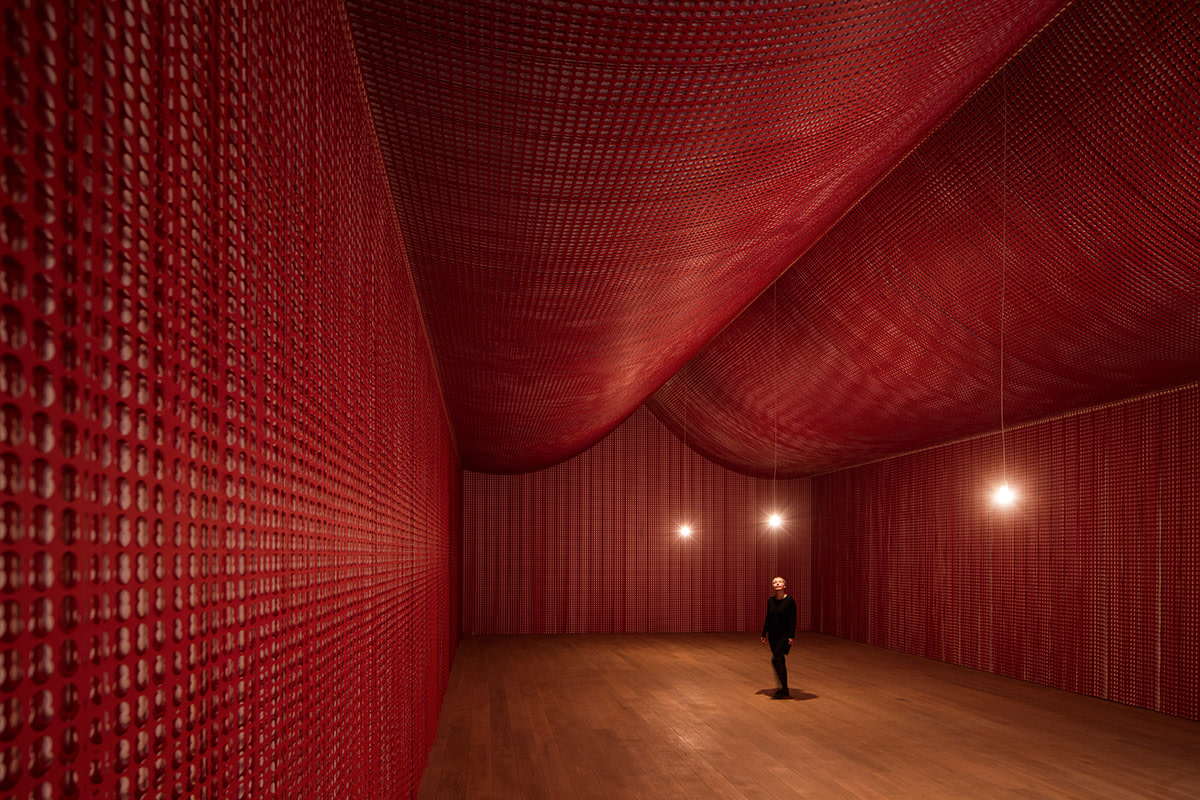
I was really interested in her 'War Room' installation, the tent made of the used poppy cut outs material. I asked whether this work was made particularly for the WW1 Centenary, and she said she had been wanting to use the material for years but hadn't yet had the chance. I really like to hear from visiting artists about how they make work as well as the work itself - it is always insightful and reassuring to hear how successful artists conduct their practice. I also have works stored away which I plan to come back to one day.


Fuj v Prker labels

Wednesday, 25 February 2015

Website

I have been making a proper website to show all of my art as I felt I was missing a formal place where my work was sufficiently visible. Previously I had directed people to Flickr (where I upload finished works), Instagram (where I upload anything that seems interesting) or here to showcase my work but none of these were used solely for that purpose.


Although an awful lot of decision making was involved in formatting and arranging the layout, the main decision to reflect on is the one I made to not only present my finished, titled works that I have exhibited, but to show some less formal products of 'making'. I have catergorised this section into 'making images', 'making objects', 'making as action' and 'making and site'. I have done this because I think it is a major part of my practice - to view only the final pieces would not be an accurate representation of what I do. I often take images (usually the ones I post on Instagram) which are not good enough quality or in an interesting enough format to warrant being an artwork, but are still potentially interesting and thought provoking. As I makes so many maquettes, trialling different structures, materials and compositions it seemed like a good opportunity to show pieces that I am pleased with and find visually exciting that I have chosen not to develop further.

Deciding which works were 'proper' artworks was a curious process that has made me question what it is that I enjoy about art making; for I have selected all the pieces that have been in exhibitions as 'proper' artworks, but some of these are not as interesting ad the scraps and maquettes that are in the making section. I have always found this - that the making is more enjoyable when it is experimental. Maybe I get bored with a work too quickly, so when it more developed with less potential, I find it uninteresting. In one PASS crit I remember having, someone in my year said that it is important to go through your own work every once in a while and evaluate it - throw work away, decide to develop it, make decisions about it. Choosing which catergory to put my work in felt like this, and it has helped me to understand my practice more by observing qualities, themes and attributes that make me think of something I have made as a 'piece of art'.